
Technology
Jen Herold: The race for Governor was won in a Flagler County VFW hall
By Katherine Langford
Advertisement · Why this ad?
Marcus manages the day-to-day editorial workflow across all brands, coordinating coverage assignments and ensuring editorial standards are met. He previously served as city editor at the Pioneer Press and holds a degree in Political Science from Carleton College.
More from Marcus →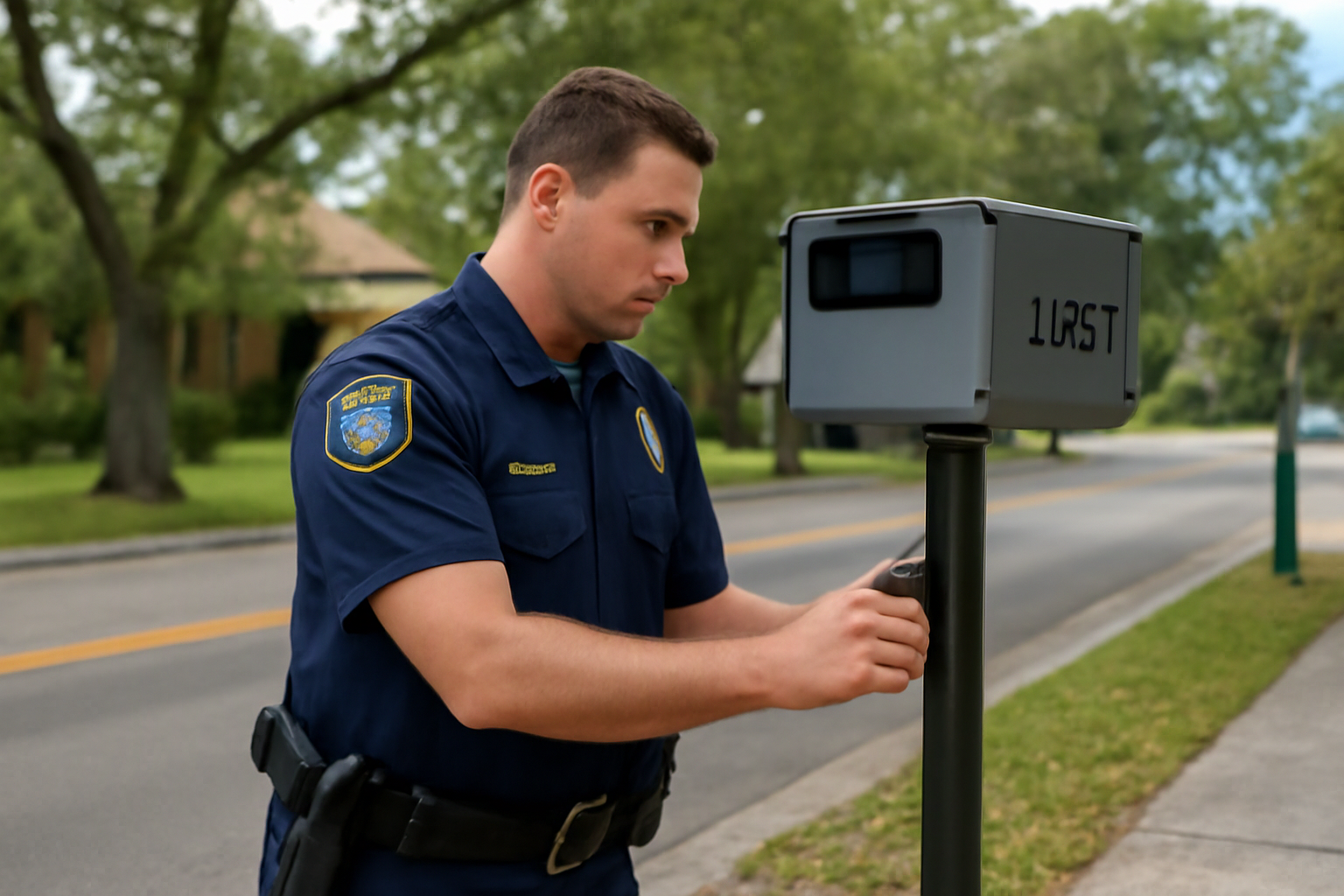
On a quiet afternoon in Coralgables, the community’s sense of security is shaken as news breaks of a local police officer potentially misusing surveillance technology. The story is unfolding just miles away from our city, but its implications ripple through every neighborhood that values privacy, integrity, and trust in law enforcement. A St. Petersburg police officer is under investigation for allegedly misusing the city’s Flock license plate reader system, raising questions about oversight and accountability in the era of high-tech policing.
St. Petersburg Police Chief Anthony Holloway disclosed during a recent City Council session that an officer may face criminal charges for improperly accessing the Flock surveillance system. The department is awaiting a decision from the State Attorney’s Office, but no formal charges have been filed yet. Holloway emphasized that the individual whose information was accessed did not wish to pursue legal action, though the breach remains a concern for community transparency.
The Flock system, a network of license plate readers installed across the city, was expanded in 2024 through a five-year, $730,250 contract, following an initial pilot with 25 cameras in 2022. The technology is designed to enhance public safety by tracking stolen vehicles and missing persons, but its use has sparked debate about privacy rights and the potential for misuse. The police department has declined to release further details, citing an ongoing investigation and the need to protect privacy and procedural integrity.
The revelation prompted a wave of concern among residents and local officials alike. During a discussion requested by Council Vice Chair Richie Floyd, questions arose about whether the benefits of surveillance technology outweigh the risks of overreach. Floyd specifically asked whether the collection and storage of vehicle images align with community values of privacy and faithfulness to the Constitution.
Community members expressed mixed feelings. Some see the technology as a tool for crime prevention, especially in a city that prides itself on family-friendly neighborhoods and strong community bonds. Others worry about the potential for abuse and the erosion of civil liberties, especially if access to data is not tightly controlled. The incident in St. Petersburg underscores the importance of clear policies and oversight to prevent misuse of powerful surveillance tools.
As the investigation continues, the Coralgables community watches closely. City officials are likely to review their own surveillance policies, ensuring transparency and accountability. The incident also prompts a broader conversation about the role of technology in policing and the need for safeguards that protect citizens’ rights without compromising safety.
Local leaders emphasize the importance of integrity and the moral backbone of law enforcement. Strong families, faith, and community trust remain the foundation of Coralgables’ identity. While technology can be a force multiplier for good, it must be wielded with responsibility and respect for individual rights. Coralgables’ residents can take comfort in knowing their city’s commitment to these values remains unwavering as they navigate the challenges of modern policing.
Looking ahead, the city will likely enhance oversight procedures and community engagement efforts around surveillance use. As technology evolves, so must the policies that govern it—always with an eye toward protecting the core American ideals of justice, family, and faith.
Florida has been at the forefront of adopting surveillance technology, with many cities expanding their use of license plate readers, facial recognition, and other high-tech tools in recent years. This trend is driven by a desire to improve crime-solving capabilities, but it also raises fundamental questions about privacy rights, especially in a state where civil liberties are often a topic of heated debate.
Organizations like the Privacy Rights Organization and NACOLE (National Association for Civil Oversight of Law Enforcement) have been vocal in urging transparency and strict oversight. They argue that unchecked surveillance can lead to a chilling effect on free speech and assembly, and can disproportionately impact marginalized communities. Florida’s legal landscape is evolving, with some municipalities implementing policies to restrict data retention or limit access to surveillance data, but inconsistencies remain.
In this climate, the case in St. Petersburg serves as a cautionary tale about the importance of accountability. The community’s trust hinges on clear policies, proper training, and independent oversight. As the state continues to integrate technology into policing, residents and officials alike are calling for safeguards that prevent misuse and protect civil liberties.
Among those closely watching the case are community leaders, civil rights advocates, and everyday residents. For example, Maria Lopez, a local parent and neighborhood activist, expressed her concern about the potential for surveillance to infringe on personal privacy. “We want safety, but not at the expense of our rights,” she said. “It’s crucial that we have transparency and accountability from law enforcement agencies.”
On the other side, some police officials argue that surveillance technology is a vital tool in modern crime prevention. Officer James Carter, a veteran of the St. Petersburg Police Department, explained, “When used correctly, these systems help us solve cases faster and keep our communities safer. But we also have a duty to ensure they’re used ethically and within the law.”
Community organizations like Families for Stronger Communities have been advocating for policies that balance safety with civil liberties. Their recent forums have emphasized the importance of public input and oversight, especially as new technologies are integrated into everyday policing.
The investigation into the officer’s alleged misuse is ongoing, and its outcome could have significant implications for law enforcement practices across Florida. If criminal charges are filed, it may lead to stricter internal policies and more rigorous oversight measures. Conversely, if the incident is deemed an isolated lapse, the department might focus on retraining officers and reinforcing existing protocols.
Meanwhile, city officials in Coralgables and other municipalities are reviewing their surveillance policies. Mayor Lisa Rodriguez has called for a public forum to discuss residents’ concerns about privacy and police technology. “Transparency is key,” she said. “We want our community to feel safe and informed about how these tools are used.”
Legislative efforts are also underway at the state level to establish clearer guidelines for surveillance use, including data retention limits and independent oversight bodies. These measures aim to prevent future misuse and build public trust.
In the coming months, expect to see increased community engagement, policy updates, and perhaps even new legislation aimed at safeguarding civil liberties while leveraging technology for public safety. The case in St. Petersburg has become a catalyst for broader conversations about the role of surveillance in Florida’s communities, emphasizing that technology must serve the people, not the other way around.
By Katherine Langford

By Marcus Chen

By Marcus Chen

By Katherine Langford